Micro Metal-Movers: MSU Biochemists Are One Step Closer to Better Cancer Treatments

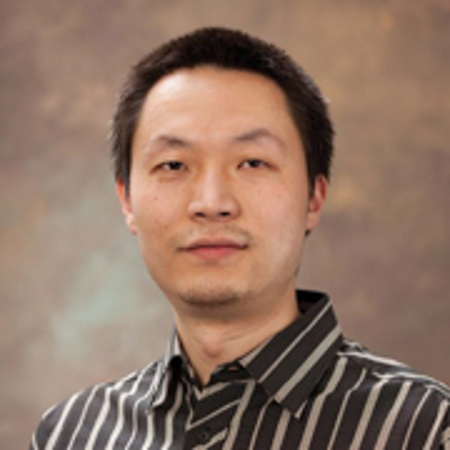
Jian Hu, PhD

By unraveling the complex choreography of cellular machinery, Michigan State University (MSU) researchers are helping identify the next generation of drug targets and cancer therapies. Led by Jian Hu, PhD, and Kenneth Merz, PhD, the MSU team has unveiled new insights into a family of proteins that, while vital for cellular functions, are also linked to an array of diseases such as breast, ovarian, and pancreatic cancers. Understanding these dynamic proteins found in cell membranes — called Zrt-/Irt-like proteins, or ZIPs for short — will contribute to the search for cutting-edge drug therapies and the improved health of patients. “The hope is to develop an inhibitor against this protein,” said Hu, a Professor in the Departments of Biochemistry and Molecular Biology, and Chemistry.
Full Story

MD Anderson Research Highlights (February 26, 2025)

In a February 26, 2025 news release, MD Anderson describes recent highlights featuring novel biomarkers for breast and cervical cancer, a new target for pancreatic cancer, insights into secondary AML, and immunotherapy benefits in rare kidney cancer. The University of Texas MD Anderson Cancer Center’s Research Highlights showcases the latest breakthroughs in cancer care, research and prevention. These advances are made possible through seamless collaboration between MD Anderson’s world-leading clinicians and scientists, bringing discoveries from the lab to the clinic and back.

Full Story

AACR Announces Fellows of the AACR Academy Class of 2025 and New AACR Academy President–Elaine Fuchs

Elaine Fuchs, PhD

On March 10. 2025, the American Association for Cancer Research (AACR) announced its newly elected 2025 class of 33 Fellows of the AACR Academy. The mission of the Fellows of the AACR Academy is to recognize and honor extraordinary scientists whose ground-breaking contributions have driven significant innovation and progress in the fight against cancer. Fellows of the AACR Academy constitute a global brain trust of leading experts in cancer science and medicine, working to advance the AACR’s mission to prevent and cure all cancers through research, education, collaboration, communication, advocacy, and funding for cancer research. Fellows of the AACR Academy are nominated and elected through a meticulous, multistep, peer-reviewed process that rigorously evaluates each candidate’s scientific achievements and contributions to global cancer research. Only those whose work has made a profound and lasting impact on cancer research and related fields are considered for election and induction into the AACR Academy.

Full Story

Douglas Hanahan, PhD, Honored with 2025 Pezcoller Foundation-AACR International Award for Extraordinary Achievement in Cancer Research

Douglas Hanahan, PhD

The Pezcoller Foundation–American Association for Cancer Research (AACR) International Award for Extraordinary Achievement in Cancer Research will be presented to Douglas Hanahan, PhD, Fellow of the AACR Academy (FAACR), during the AACR Annual Meeting 2025, to be held April 25-30 at the McCormick Place Convention Center in Chicago, Illinois. The award was announced on March 11, 2025 by the AACR. Hanahan is the Ludwig Distinguished Scholar at the Lausanne Branch of the Ludwig Institute for Cancer Research. He is being recognized for his fundamental discoveries in cancer research that have had a far-reaching translational impact. Through the generation and characterization of innovative mouse models, Hanahan defined multistep tumorigenesis by uncovering the molecular mechanisms required to drive cancer growth and helped establish the principle that malignant traits in cancer are conferred by cooperative interactions between cancer cells and co-opted host cells recruited into the tumor microenvironment. Notably, Hanahan conceptualized, together with Robert A. Weinberg, PhD, the “Hallmarks of Cancer,” a logical framework for rationalizing the vast complexity of cancer that continues to evolve and resonate broadly with the entire cancer research community.

Full Story