

by Manisha Kashyap, PhD
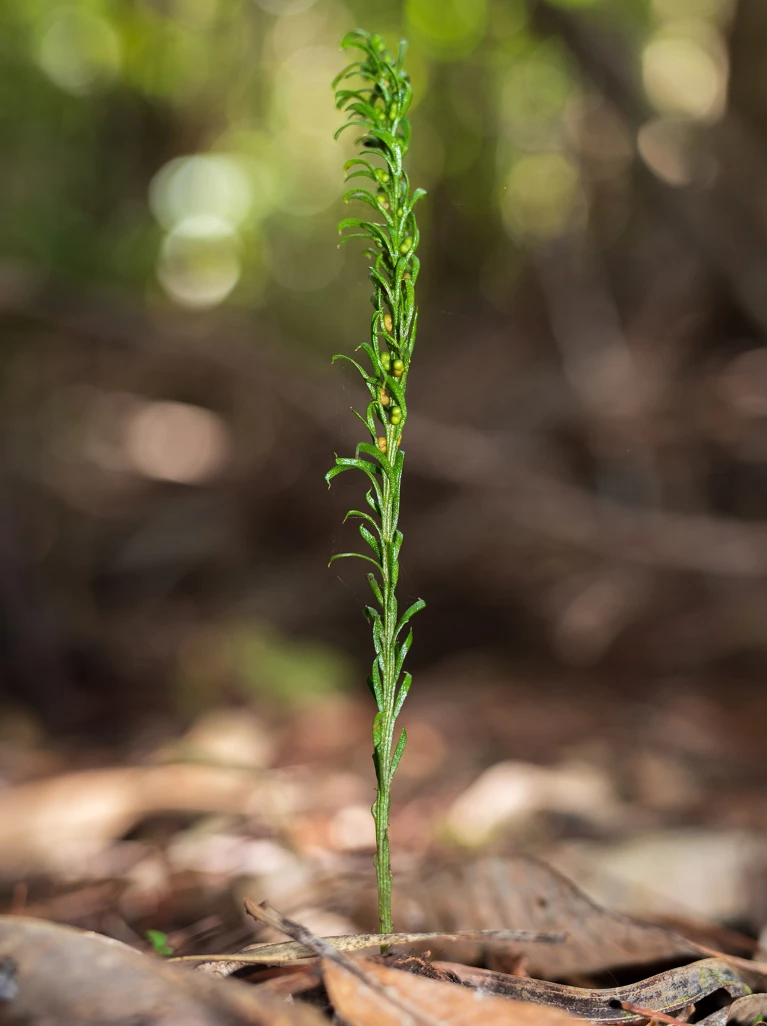
In an astonishing scientific breakthrough, researchers have discovered the largest genome ever recorded in a eukaryote, hidden within the unassuming fork fern Tmesipteris oblanceolata. This tiny plant, native to the lush forests of New Caledonia in the South Pacific, boasts a genome size of 160.75 Gbp/1C (i.e., 1C = nuclear DNA content in a gametic nucleus), shattering previous records and redefining the boundaries of genetic research. The findings, published on May 31, 2024, in the journal iScience, promise to ignite new debates and studies in the world of genomics. The open-access article is titled “A 160 Gbp Fork Fern Genome Shatters Size Record for Eukaryotes.” The research was part of an effort to enhance our understanding of how and why giant genomes evolve and function, and was based on previous evidence of genomic gigantism in the small genus Tmesipteris.
Key Highlights
Astounding Genome Size: The Tmesipteris oblanceolata genome is over 50 times larger than the human genome, making it the largest eukaryotic genome ever identified.
Expanding Genetic Frontiers: This discovery extends the known range of genome sizes among eukaryotes by over 61,000-fold, showcasing the extreme genetic diversity found in the plant kingdom.
Evolutionary Marvel: The enormous genome of this fork fern challenges existing theories on genome size limits and opens new avenues for understanding the dynamics of genomic gigantism.
The Research
A team of scientists from the Botanical Institute of Barcelona and the Royal Botanic Gardens, Kew, UK, utilized advanced propidium iodide flow cytometry to measure the genome size of Tmesipteris oblanceolata. Their results reveal a genome size that far exceeds any previously recorded in eukaryotic organisms, highlighting the unique evolutionary pathways that can lead to such genomic gigantism.
So, the world’s genomic champion (Tmesipteris oblanceolata) is a species of plant called a fork fern. The plant contains a whopping 160 billion base pairs, the units that make up a strand of DNA. That’s 11 billion more than the previous record holder, the flowering plant Paris japonica, and 30 billion more than the marbled lungfish (Protopterus aethiopicus), which has the largest animal genome.
Its colossal number of base pairs raises questions as to how the plant manages its genetic material because only a small proportion of DNA is made of protein-coding genes!!
There’s also the question of how and why an organism evolved to have so many base pairs?
“Generally, having more base pairs leads to higher demand for the minerals that comprise DNA and for energy to duplicate the genome with every cell division. But if the organism lives in a relatively stable environment with little competition, a gargantuan genome might not come with a high cost,” the experts say.
Implications for Evolutionary Biology
This groundbreaking discovery provides fresh insights into the evolutionary mechanisms that allow certain species to develop such expansive genomes. The Tmesipteris oblanceolata genome is believed to have grown through a combination of polyploidy and the accumulation of repetitive DNA, setting it apart from animal genomes which typically do not reach such sizes.
Future Research Directions
Sequencing and analyzing the gigantic genome of Tmesipteris oblanceolata poses significant challenges, but modern genomic technologies are increasingly capable of tackling such tasks. Understanding how this fern manages its vast genetic material could reveal new principles of genome organization and function, potentially influencing a wide range of biological research fields.
This unprecedented discovery not only pushes the known limits of genome size, but also emphasizes the importance of continued exploration and curiosity in genomics. The unassuming fork fern, once overlooked, now stands at the forefront of genetic research, offering a tantalizing glimpse into the hidden complexities of life.
For further reading, access the original study in iScience published on May 31, 2024 (https://doi.org/10.1016/j.isci.2024.109889), and additional insights in a Nature commentary (https://doi.org/10.1038/d41586-024-01567-7), also published on May 31.
About the Writer

Dr. Manisha Kashyap (Dr. MK)
BDS (Hons), MSc (Clinical Research), PhD (Healthcare)
Manisha Kashyap earned a BS in Dentistry (Gold Medalist) and an MS in Clinical Research, and she is a driven PhD scholar in Health Policy and Management.
With a rich background as a Drug Safety Analyst for top-tier bio pharmaceutical companies, she blends clinical expertise with a passion for advancing healthcare accessibility and innovation through her writing career for the love of science and technology via MedKnow Research Writing Solutions.
Dr. Kashyap’s PhD thesis is on “Artificial Intelligence (AI) and Public Health: Harnessing the Power of AI for Enhanced Public Health Policy and Management.”