

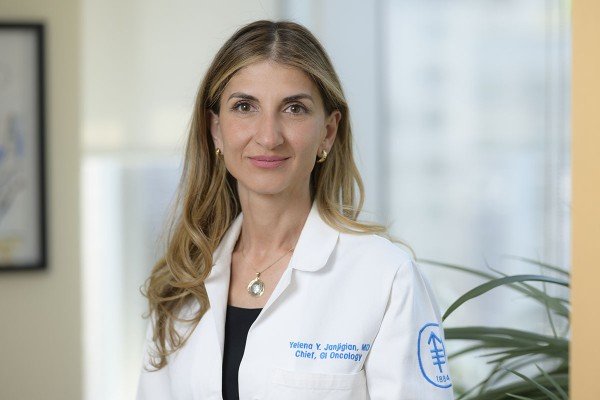
Ahead of the annual European Society for Medical Oncology Congress taking place in Madrid October 23-27, 2026 Scientific Committee Co-Chairs Yelena Janjigian, MD, Memorial Sloan Kettering Cancer Center (MSK), U.S, and James Larkin, MD, PhD, The Royal Marsden NHS Foundation Trust, UK, highlight practice-changing studies and evolving treatment strategies.
Which key scientific questions, emerging topics, or areas of unmet need do you think stand out in the ESMO Congress 2026 scientific program?
Yelena Janjigian: The ESMO Congress 2026 is shaping up to be a particularly exciting meeting, with several potentially important advances in cancer immunotherapy, targeted therapies, antibody-drug conjugates (ADCs), and the application of artificial intelligence to cancer research and clinical care.
As Scientific Committee Co-Chairs, our priority was to highlight not only trials with immediate clinical implications, but also studies introducing new biological concepts and therapeutic approaches that could influence the direction of oncology research.
Among many, an important theme is the diversification of immunotherapeutic mechanisms beyond PD-1 and PD-L1 blockade. Despite the success of checkpoint inhibitors, primary and acquired resistance remain major challenges.
James Larkin: In Madrid, there will also be important findings to reflect on regarding treatment optimization, particularly how much immunotherapy patients need and whether we can safely reduce treatment duration or intensity in certain settings. And there will be a lot of interest in emerging therapeutic approaches, including bispecific, trispecific and multispecific antibodies, and T-cell engagers. These newer therapeutic approaches offer new ways of treating cancer, often by harnessing new technologies or mechanisms of action. ADCs, for example, are not a new concept, but there is enormous interest in them at the moment. In recent years, we have seen an explosion of newer therapeutic approaches, many with very promising data. What we need now, however, are well-conducted clinical trials to establish where these therapies fit into clinical practice and how we can maximize their benefit for patients.
In which areas do you expect the most meaningful advances and potentially practice-changing results?
Yelena Janjigian: I am particularly looking forward to chairing Sunday’s Presidential Symposium, which brings together two studies exploring different approaches to improving therapeutic efficacy in gastrointestinal cancers.
CLARITY-Gastric 01 (LBA7 ) is a study evaluating sonesitatug vedotin, a CLDN18.2-directed ADC, in advanced gastroesophageal cancer. This is particularly interesting given the emergence of CLDN18.2 as a therapeutic target and the expanding role of ADCs in solid tumors.
The next generation of ADC development involves much more than identifying a tumor-associated antigen, rather we need to understand target expression and heterogeneity, internalisation, payload sensitivity, bystander effects, and mechanisms of acquired resistance. And importantly, can ADCs remain effective when target expression is heterogeneous or relatively low? These are questions that will become increasingly relevant as multiple ADCs are developed and sequenced across different cancers.
HARMONi-GI1 (LBA8 ) will also be presented. The study, evaluating ivonescimab, a PD-1/VEGF bispecific antibody, with chemotherapy in advanced biliary tract cancer, is an interesting example of therapeutically integrating immune modulation and angiogenesis inhibition within a single construct. VEGF signaling contributes to an immunosuppressive tumor microenvironment through several mechanisms, including effects on immune-cell trafficking and vascular function. The scientific question is whether concurrent PD-1 and VEGF targeting can produce meaningful improvements beyond conventional checkpoint inhibition.
James Larkin: For me, the highlight of the year is the INTERPATH-001study (LBA1), a highly anticipated phase III trial in melanoma, which is my area of expertise. It will be presented during Saturday’s Presidential Symposium, reporting positive findings that were already disclosed by the clinical trial sponsor in a press release. One of the reasons for the excitement around this study is that it investigates a personalized mRNA vaccine, a technology that has not yet demonstrated its potential to benefit patients with cancer. That makes it particularly exciting for the melanoma community, and perhaps even more exciting is the possibility that this approach could be applied to many different cancer types.
Treatment optimization is a recurring theme across many tumor types. Will any key data addressing this important issue be presented at ESMO26?
Yelena Janjigian: Innovation is not limited to developing new drugs, and as more patients experience durable benefit from immunotherapy, there is urgent need to define the optimal duration and intensity of treatment. The MOIO trial (LBA10), which evaluates reduced-frequency immune checkpoint inhibitor administration in responding patients, will address a clinically relevant and increasingly important question: can efficacy be preserved while reducing cumulative treatment exposure, toxicity, and treatment burden?
Finding an answer requires rigorous prospective evaluation, particularly because radiographic response alone may not adequately identify patients who can safely receive less treatment. Ultimately, this is another dimension of precision medicine: identifying not only which treatment a patient needs, but also how much treatment is necessary.
With so many high-profile studies being presented, how important is it to place new findings in their proper scientific context?
James Larkin: I think it is central to the role of ESMO and the academic oncology community to make sense of the data, put them into context, and understand what they mean for patients.
A certain level of excitement around new treatments is probably inevitable, especially in the early stages of development. I was in clinic this morning, and I lost count of the number of times patients asked me about a new treatment and what it might mean for them. As oncologists, we are used to having these conversations every day. INTERPATH-001 provide a good example of how the promise of emerging therapeutic approaches should be assessed: at the ESMO Congress 2026, we will finally have the opportunity to see the study data in detail and discuss them, and that is important not only for the researchers directly involved in the study, but for the wider oncology community. I genuinely believe scientific congresses still have a great deal to offer.