

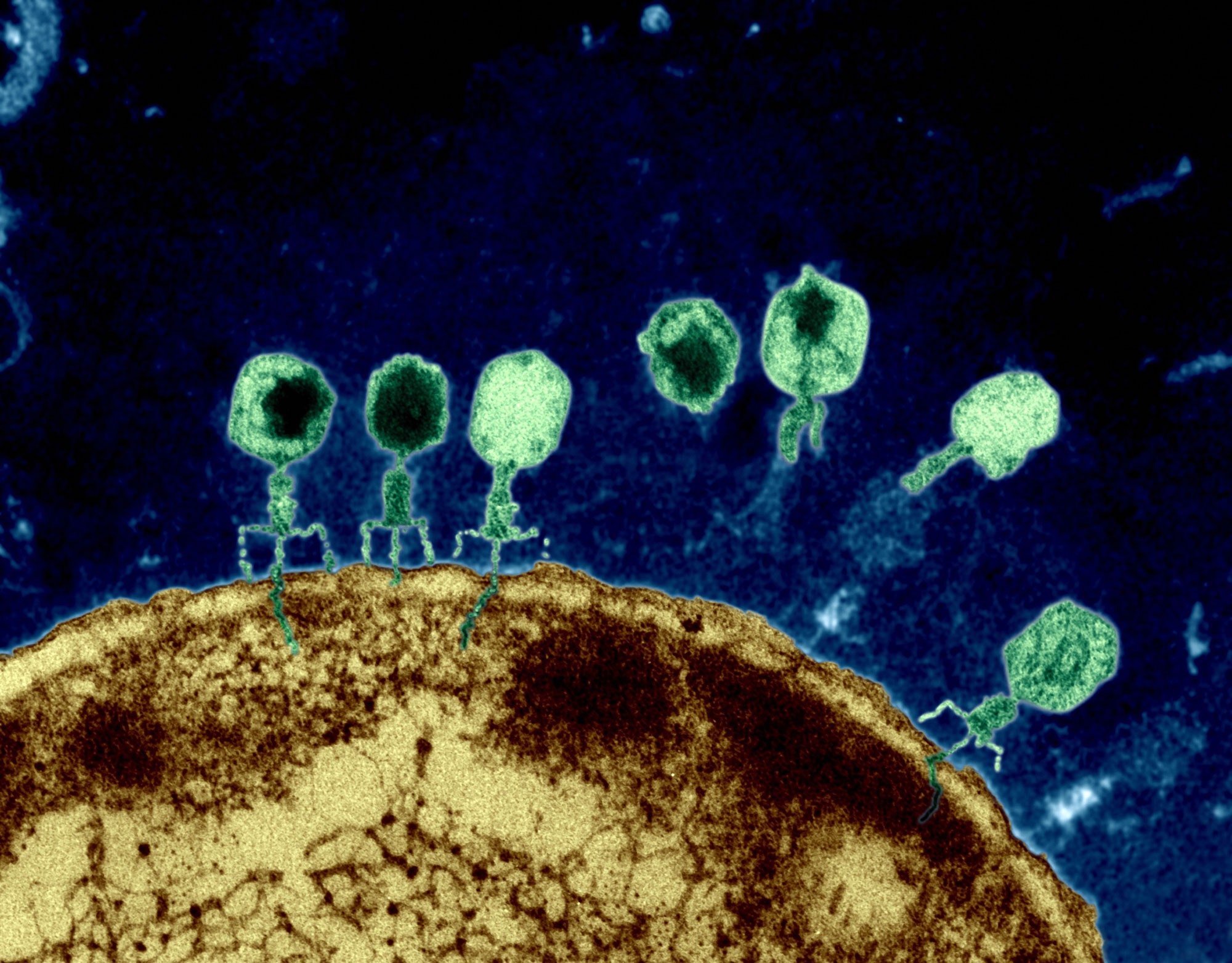
A team of investigators led by Drs. Zeyuan Guanand Tingting Zouat Huazhong Agricultural University(China) describe the structure and mechanism of a novel anti-phage defense system in bacteria. In bacteria, reverse transcriptase (RT) was first identified in retron genetic elements, which are important antiphage defense systems that consist of an RT, a noncoding RNA (ncRNA), and an effector. The RT moiety uses ncRNA as a template to produce a chimeric DNA-RNA molecule and functions as an antitoxin to inhibit the toxicity of the effector. Based on the associated effectors, retrons can be classified into 13 types, and are present in approximately 11% of bacterial genomes. Previous studies by these authors reported the cryo-electron microscopy (cryo-EM) structure of a Retron-Eco1 defense system consisting of the RT, msDNA, and effector, and identified a phage-encoded DNA cytosine methyltransferase (Dcm) that activates the Retron-Eco1 system by directly methylating msDNA. However, the mechanisms underlying the assembly and activation of other retron systems remain largely unexplored.
In this work, the authors focus on the Retron-Eco7 defense system, which belongs to the Type II Septu defense system and contains an RT, msDNA, and two effector proteins: an ATPase (PtuA) and an HNH nuclease (PtuB). The authors found that the Retron-Eco7 system from Escherichia coli provides strong, specific resistance against phage. They determined cryo-EM structures of Retron-Eco7 defense complex, revealing that the Eco7 complex assembles into an oligomeric structure with two distinct forms. Within the complex, interactions between RT-msDNA and PtuAB are primarily mediated by msDNA binding to PtuA subunits.
Based on their findings, the authors propose that Retron-Eco7 functions as a toxin-antitoxin system, where RT-msDNA acts as the antitoxin and the PtuAB complex serves as the toxin. They demonstrated that bacterial cells expressing Retron-Eco7 exhibited progressive DNA loss following phage infection, with most cells eventually becoming “phantom cells”, leading to abortive infection and population-level protection. Finally, the authors identified three distinct phage-encoded triggers for the system. Among them, a flap endonuclease (FEN) derived from T5-like phages cleaves the msDNA tether in the Retron-Eco7 toxin-antitoxin complex, thereby activating PtuAB’s endonuclease activity.
Together, these studies shed light on the mechanistic understanding of retron assembly and activation, and establish a unified retron-based toxin–antitoxin paradigm in which phage proteins directly target the msDNA “antitoxin,” thereby unleashing a potent antiviral response.
Reviewers and editors at NAR who examined this study and manuscript stated that “This study is exceedingly timely… it provides compelling evidence for a hybrid defense system and expands our understanding of retron-mediated immunity” and “Given the growing interest in retron biology and the timely nature of this work – complementing recent high-profile studies – I recommend prioritizing the publication of these findings.”
The Laboratory of Tingting Zouat Huazhong Agricultural University(Wuhan, China) investigates the molecular arms race between bacteria and viruses (phages), including bacterial anti-phage defense systems—such as retrons and toxin-antitoxin modules—and the arbitrium-based phage lysis-lysogeny decision. Dr. Zeyuan Guan employs AI-empowered structural biology to elucidate the mechanisms of insecticidal proteins and design sustainable biopesticides.
Nucleic Acids Research is a publication of Oxford University Press and is fully open access. Its mission is to provide outstanding, scientist-led evaluation and dissemination of the highest-caliber research across a wide range of disciplines focused on the role of nucleic acids and nucleic acid-interacting molecules in cellular and molecular biology. Breakthrough articles at NAR describe studies that solve a long-standing problem in their field or provide exceptional new insight and understanding into an area of research that will clearly motivate and guide new research opportunities and directions. They represent the top papers that NAR receives for publication and are selected by the Editors based on nominations by authors and/or reviewers, and on the subsequent recommendation of the reviewers and Editorial Board members.