

A new review summarizes anti-tumor mechanism of T cells, immune escape, and potential therapeutic strategies
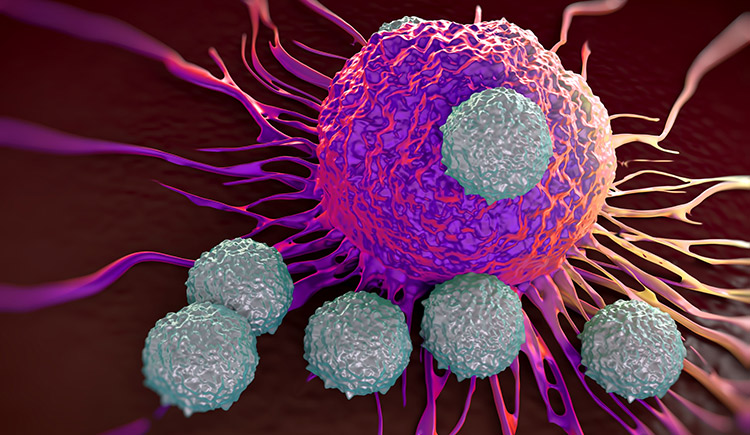
T cells play central roles in the adaptive immune response against cancer. Their functional inactivation is a primary driver of tumor progression, making the reactivation of T cell function a main goal in immunotherapy. The review details how T cells specifically recognize and eliminate malignant cells by engaging tumor antigen peptides presented by MHC molecules. The open-access review was published October 21, 2025 in Immunity & Inflammation and is titled “Leveraging T Cells for Cancer Immunotherapy.”
“T cells can specifically recognize tumor antigen epitopes presented by MHC molecules to clear malignant tumor cells. The targets that can be recognized by T cells in tumors mainly include two types,” the authors point out. Highly immunogenic, tumor-specific “neoantigens” derived from somatic mutations, and more widely shared “tumor-associated antigens” that are overexpressed in cancers.
The review also illustrates how tumors evade this immune surveillance through multiple mechanisms, including suppressing T cell activation, inducing T cell exhaustion within the immunosuppressive tumor microenvironment, undergoing immunoediting to lose target antigens, and creating physical barriers to T cell infiltration.
The review team further provides a detailed discussion on the three major strategies of T cell-mediated immunotherapy:
- Antibody-based therapies, such as immune checkpoint inhibitors that block inhibitory signals and bispecific T cell engagers that redirect T cells to tumors.
- Adoptive Cell Transfer (ACT), including Tumor-Infiltrating Lymphocyte (TIL) therapy, and genetically engineered CAR-T and TCR-T cell therapies, which have shown breakthrough success in hematological and solid malignancies, respectively.
- Cancer vaccines, designed to prime and boost endogenous T cell responses against tumor antigens.
“No single immunotherapy modality is sufficient to address the complex challenges of tumor heterogeneity, the immunosuppressive microenvironment, and on-target/off-tumor toxicities,” explains senior author Professor Yao Dong, University of Oxford. “The future lies in rationally designed combination therapies that integrate these approaches.”
The review identifies two critical frontiers for current research on immunotherapy: first, the discovery of more precise tumor antigens and the establishment of corresponding T cell receptor libraries to develop broader, more specific therapies; second, a deeper mechanistic understanding of T cell biology to identify key functional subsets and biomarkers for improved patient stratification, and ultimately improving the response rate of tumor immunotherapy.
This work provides a robust framework of T cell-mediated immunity and immunotherapy for researchers and clinicians, outlining a clear path toward more effective and durable immunotherapies for cancer patients.
About Authors
Tao Dong
Professor Tao Dong is the Ita Askonas Professor of Translational Immunology at the Nuffield Department of Medicine, University of Oxford, and the UK Director of the Chinese Academy of Medical Sciences (CAMS) Oxford Institute. She leads the T Cell Laboratory at the Medical Research Council (MRC) Human Immunology Unit, University of Oxford. Her research focuses on the function of antigen-specific cytotoxic T cells, utilizing advanced single- and multi-omics technologies alongside T cell functional assessment platforms to investigate the critical role of T cells in controlling viral infections and cancer progression.
Adam Bates
Dr. Adam Bates is a Postdoctoral Research Scientist in Professor Tao Dong’s group at the Chinese Academy of Medical Sciences Oxford Institute. His research aims to clarify the immune response mechanisms of CD8+ T cells in non-small cell lung cancer (NSCLC). By utilizing advanced technologies such as single-cell RNA and T cell receptor (TCR) sequencing, along with spatial transcriptomics, he seeks to identify T cell populations capable of recognizing and attacking tumors without exhibiting classical exhaustion features. This work lays a solid foundation for developing next-generation anti-tumor immunotherapies.