Biochemist’s Impact on Science and Students Is Honored by ASBMB

UTA’s Kayunta Johnson-Winters named American Society for Biochemistry and Molecular Biology fellow

Kayunta Johnson-Winters, PhD

Kayunta Johnson-Winters, PhD, an Associate Professor of Chemistry and Biochemistry at The University of Texas at Arlington, has been named a 2025 fellow of the American Society for Biochemistry and Molecular Biology (ASBMB). The honor recognition recognizes her contributions to biochemistry and molecular biology and her efforts to support junior faculty, women in science, and student mentorship. “This is a tremendous honor and recognizes Kay’s important work in advancing our understanding of disease while mentoring junior faculty and student researchers,” said Morteza Khaledi, PhD, Dean of UTA’s College of Science. “I’m pleased to see her talent and efforts recognized.”

Full Story

Novel Enzyme Found in Gut Bacteria Could Revolutionize Prebiotic Research

Researchers have discovered a new enzyme that breaks down and synthesizes previously unexplored glycans with prebiotic capabilities

Carbohydrate chains, or glycans, are complex sugar-like compounds that play important roles in various biological processes and structures in our bodies. Galactosides are a type of glycan found in plants, animals, and microorganisms. For example, galactosides are present in plant cell walls and in certain types of beneficial sugars known as prebiotic oligosaccharides, which support gut health. Many glycans containing galactose are also added to processed foods like juice and powdered milk due to their potential health benefits. Studying the enzymes that break down these glycans is essential for understanding their prebiotic mechanisms and for improving the way they can be used in food and health products. β-Galactosidases are enzymes that release galactose from galactosides. However, different β-galactosidases target specific galactosides. These enzymes are found in the intestines of mammals, such as in the human gut bacteria Bifidobacterium, which helps digest complex carbohydrates. Recent studies have shown that another gut bacterium, Bacteroides xylanisolvens, has the potential to utilize a broad range of carbohydrates, though little is known about its exact abilities.

Full Story

Medicus Announces Positively Trending Interim Analysis for SKNJCT-003 Phase 2 Clinical Study to Non-Invasively Treat Basal Cell Carcinoma of the Skin (BCC)

Interim analysis showed complete clinical clearance of more than 60%

On March 6, 2025, Medicus Pharma Ltd. (NASDAQ: MDCX) (“Medicus” or the “Company”) was pleased to announce a positively trending interim analysis for its SKNJCT-003 Phase 2 clinical study to non-invasively treat basal cell carcinoma of the skin (BCC). The SKNJCT-003 clinical study is currently underway in nine clinical sites in United States and is expected to randomize 60 patients. The interim analysis was conducted after more than 50% of the targeted 60 patients in the study were randomized. The investigational product is a patch that is 15 mm X 15 mm with a 13 mm X 13 mm active surface carrying 400 microneedles of 750 microns in length. Each needle is made of dissolvable cellulose and carries a dose of the powerful anti-cancer drug doxorubicin which not only kills cells, but also stimulates an immune response to the cancer by activating the calreticulin pathway. Doxorubicin is widely available and has a 30-year history of use, in addition to its relative inexpense, said Raza Bakhari, MD, MBA, CEO of Medicus Pharma. This combination will permit the “democratization” of the Medicus treatment for skin cancer, Bakhari said.

Full Story

Researchers Discover a Cause of Leptin Resistance—And How to Reverse It

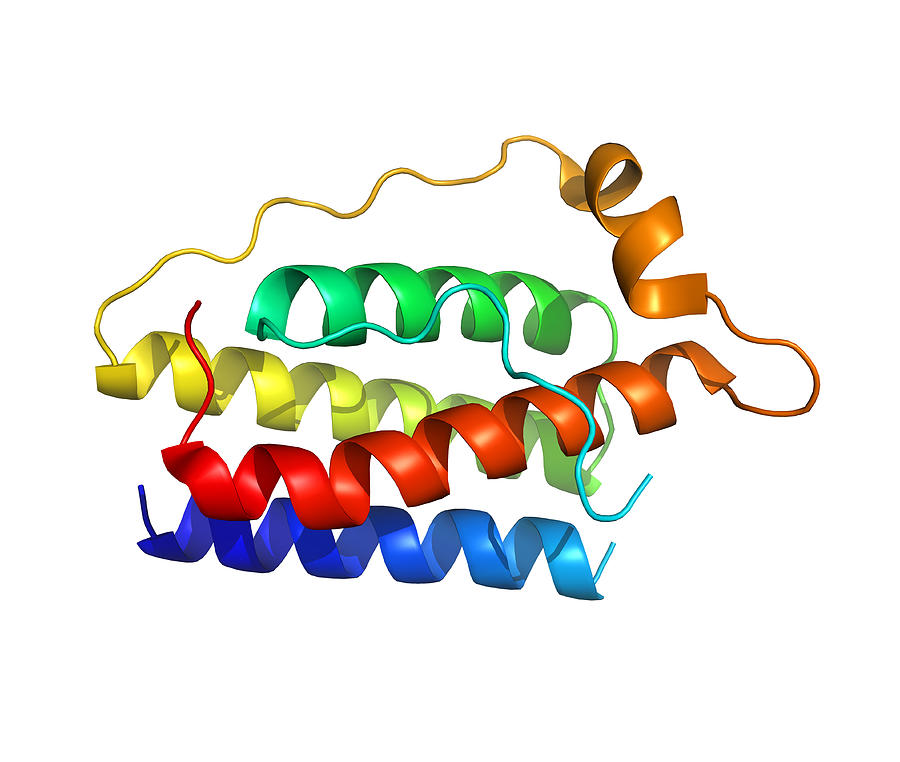
Depiction of leptin molecule

Worldwide obesity rates have more than doubled since 1990, with nearly a billion people now falling into the category. Though a complex interplay of genes, diet, and environment contribute, 90% of cases share one thing in common: leptin resistance. In lean individuals, fat cells produce the hormone leptin, which suppresses appetite. But in most individuals with obesity, this signal fails to register. Why this happens has been a mystery for more than three decades, ever since Jeffrey M. Friedman’s laboratory at the Rockefeller University cloned the leptin gene in 1994. But now Bowen Tan, Kristina Hedbacker, and other researchers in Friedman’s Laboratory of Molecular Genetics have discovered a neural mechanism involved in leptin resistance—and, crucially, a way to reverse it in mice using a well-known drug. As the researchers describe in a new paper published March 4, 2025 in Cell Metabolism, the drug rapamycin restores leptin sensitivity to diet-induced obese mice, leading to significant loss of fat with only minimal effects on muscle. The open-access article is titled “A Cellular and Molecular Basis of Leptin Resistance.”

Full Story

How Crucial DNA Repair Protein Works—And What It Means for Cancer Treatment

New structural blueprint is key for better targeting cancer cells, particularly those with BRCA1 and BRCA2 mutations

The Pol-theta enzyme (blue) joins two parts of a broken DNA strand (yellow). (Credit: Scripps Research)

DNA repair proteins act like the body’s editors, constantly finding and reversing damage to our genetic code. Researchers have long struggled to understand how cancer cells hijack one of these proteins—called polymerase theta (Pol-theta)—for their own survival. But scientists at Scripps Research have now captured the first detailed images of Pol-theta in action, revealing the molecular processes responsible for a range of cancers. The findings, published in Nature Structural & Molecular Biology on February 28, 2025, illuminate how Pol-theta undergoes a major structural rearrangement when it binds to broken DNA strands. By unveiling Pol-theta’s DNA-bound structure—its active state—the study provides a blueprint for designing more effective cancer drugs. The article is titled “Human Polymerase Θ Helicase Positions DNA Microhomologies for Double-Strand Break Repair.” “We now have a much clearer picture of how Pol-theta works, which will enable us to block its activity more precisely,” says senior author Gabriel Lander, PhD, a professor at Scripps Research.

Full Story

MD Anderson Researchers Develop Novel Antibody-Toxin Conjugate

New drug design prompts immune response rather than directly destroying cancer cells

Co-corresponding author Wen Jiang, MD, PhD

Researchers at The University of Texas MD Anderson Cancer Center have developed a novel antibody-toxin conjugate (ATC) designed to stimulate immune-mediated eradication of tumors. According to preclinical results published February 25, 2025 in Nature Cancer, the new approach combined the benefits of more well-known antibody-drug conjugates (ADCs) with those of immunotherapies. The article is titled “An Antibody–Toxin Conjugate Targeting CD47 Linked to the Bacterial Toxin Listeriolysin O for Cancer Immunotherapy.” ADCs have emerged as a breakthrough in recent years due to their modular design, which enables precise delivery of therapies to tumors by targeting specific proteins expressed on cancer cells. These conjugates use their tumor-targeting ability to deliver a payload, usually a chemotherapy, directly to the cancer cells, resulting in their destruction. According to co-corresponding author Wen Jiang, MD, PhD, Associate Professor of Radiation Oncology, the ATC differs in that it’s not designed to kill the cancer cells directly.

Full Story