

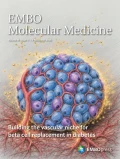
The tiny zebrafish is helping researchers rapidly determine whether a newborn’s genetic mutation is likely to cause spinal muscular atrophy (SMA), one of the leading causes of infant mortality worldwide. The world-first research, led by Jean Giacomotto, PhD, from Griffith University’s Institute for Biomedicine and Glycomics in Australia, has been featured on the front cover of EMBO Molecular Medicine this month (January 2026). Dr. Giacomotto said: “SMA is a genetic disorder that causes progressive loss of motor neurons, leading to muscle weakness and loss of basic motor functions. Without treatment, SMA is typically fatal, and while highly effective therapies now exist, they can exceed US$2 million per child per year and must be initiated before symptoms appear such as when a baby is able to sit but lacks sufficient neck strength to hold their head steady. If treatment starts after the emergence of these symptoms, the child will have already experienced irreversible degenerative damage, leading to life-long problems and possibly death within the first years of life. When a baby carries a mutation which has never been seen before, known as a ‘variant of uncertain significance or VUS,’ clinicians face an impossible dilemma – start treatment immediately, risk unnecessary intervention, or wait and risk irreversible nerve damage.”
To solve this, Dr Giacomotto and his team developed a rapid zebrafish-based functional assay which could determine the pathogenicity of a novel SMN1 mutation within days, potentially informing urgent clinical decisions worldwide.
“Within a clinically meaningful timeframe, we were able to functionally test each baby’s exact mutation and show it was not harmful,” Dr Giacomotto said.
“This research provides the clearest demonstration to date that zebrafish can play a decisive role in clinical variant interpretation, particularly in newborns flagged through expanding genomic screening programs.”
“With genomic sequencing rising worldwide, clinicians are encountering more and more uncertain variants.”
“This tiny fish offers a fast and affordable way to help resolve these cases and reduce distress for families.”
The open-access paper titled “Clinical Relevance of Zebrafish for Gene Variants Testing: Proof-of-Principle with SMN1/SMA” was published December 15, 2025 and featured as the front cover of the January 2026 issue of EMBO Molecular Medicine.
In their abstract, the authors write “For novel variants, clinicians lack robust analytic tools to predict pathogenicity before irreversible damage occurs. To address this gap, we deployed a zebrafish model presenting smn1-LOF, exhibiting progressive motor defects and death by only six days of age. We evaluated two SMN1-variants of uncertain significance (VUS) identified in newborn infants awaiting definite diagnosis and treatment recommendations. We demonstrated that while known pathogenic variants did not change the disease course, wild-type SMN1 and both infants variants rescued SMA hallmarks in zebrafish, demonstrating the relevance of this approach for VUS-testing within a crucial timeframe for patients.”